
Are Arizona's Bees Dangerous? Wasp & Bee Guide
Are the Bees in Phoenix Actually Dangerous?
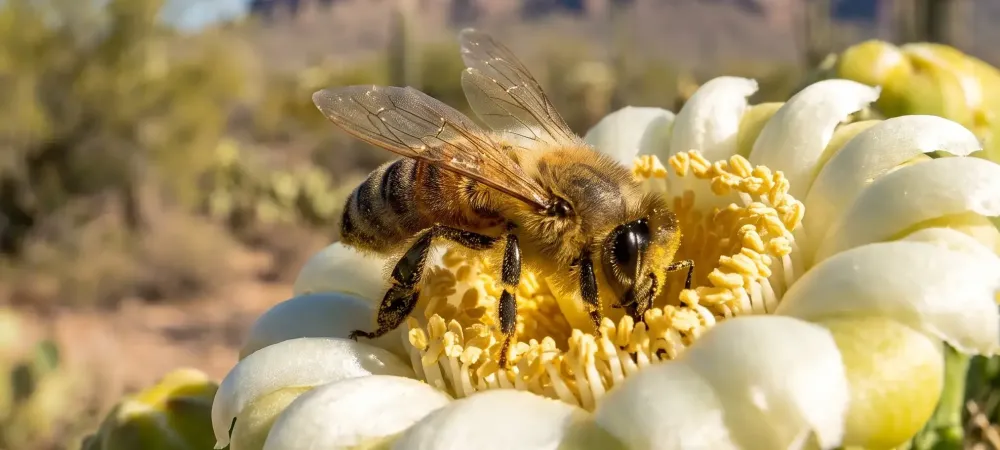
Most wild honey bee colonies found in the Phoenix area today carry Africanized genetics, according to the University of Arizona Cooperative Extension. That means a colony that looks like an ordinary honey bee hive can defend itself far more aggressively than the docile bees most people picture. This doesn't make every bee sighting an emergency, but it does mean the advice to simply leave a hive alone doesn't apply here the way it does in most of the country.
How to Tell a Wasp from a Bee
| Feature | Bees (incl. Africanized) | Wasps (paper wasps, yellow jackets) |
|---|---|---|
| Body | Fuzzy, rounded, hairy legs built for carrying pollen | Smooth, shiny, narrow waist |
| Diet | Pollen and nectar | Other insects, sweets, protein |
| Nest style | Enclosed hive with wax comb, often in a cavity | Open paper comb (paper wasps) or enclosed paper nest (yellow jackets) |
| Defensive behavior | Can defend in very large numbers if Africanized | Stings repeatedly, defends aggressively, especially yellow jackets |
Why "Just Leave Them Alone" Isn't Safe Advice Everywhere
The common nationwide advice is to leave a bee colony alone since bees are beneficial pollinators, and that's good advice in most of the country. It assumes docile European honey bee behavior, though, and a colony with Africanized genetics defends its nest with far more bees, reacts faster, and will chase a perceived threat much farther than a typical hive. That difference is exactly why a hive discovered on a Phoenix-area property gets handled differently than the same discovery almost anywhere else in the United States.
Signs of an Aggressive Colony vs. a Normal Hive
- Bees responding rapidly to nearby noise, vibration, or activity, not just direct contact
- Bees chasing beyond a few feet from the nest entrance
- An unusually large number of bees actively guarding the entrance
- A colony located in an irrigation box, meter box, or wall void, all common Africanized nesting spots
When Bee and Wasp Activity Peaks in Phoenix
Swarm season runs from roughly March through June, when established colonies split off and search for a new nesting cavity, which is when most new hive sightings on residential properties happen. Wasp activity, particularly yellow jackets, tends to build through late summer as colonies reach peak size before the season ends. A hive that goes unnoticed during a mild spring can grow substantially larger by August, which is part of why early identification matters more here than in regions without Africanized genetics in the local population.
What to Do If You Find a Hive on Your Property
Back away calmly and keep people and pets clear of the area. Don't attempt to spray, seal, or disturb the entrance, since a partial disturbance can trigger a full defensive response from the colony without actually removing it. Note the general location so a technician can find it quickly, and treat the area as off-limits until it's been addressed.
Why This Needs a Professional, Not DIY Removal
Professional removal accounts for colony behavior, access, and protective equipment matched to Africanized-genetic populations specifically. Greenleaf Pest Control's pest control service handles hive removal with that risk profile in mind, rather than treating it like a standard wasp nest. If stinging insects are one part of a broader pest concern, our pest library covers the rest of what shows up around Phoenix-area homes, including the scorpions that share the same "handle with caution" category. Homeowners in more rural, desert-adjacent areas like Cave Creek tend to encounter wild colonies more often given the surrounding open desert.
Common Questions About Wasps and Bees in Phoenix
Are all bees in Arizona Africanized?
Not every individual colony has been tested, but per University of Arizona Extension research, most wild honey bee colonies in the region carry Africanized genetics, which is why every wild hive is treated with caution by default.
What should I do if I get stung multiple times?
Multiple stings or any sign of an allergic reaction, such as difficulty breathing or swelling beyond the sting site, calls for immediate medical attention rather than home treatment.
Will a hive leave on its own if I ignore it?
No. Once a colony establishes itself, it grows and typically becomes more defensive over time rather than moving on by itself.
Are wasps and yellow jackets also more aggressive in Arizona?
Yellow jackets defend their nests aggressively regardless of region, and Phoenix's dry heat pushes both wasps and bees toward moisture sources near homes, especially in late summer.
Found a Hive or Nest on Your Property?
Don't take chances with stinging insects in the Phoenix area. Let a professional assess it first.
Call Greenleaf Pest Control at 623-399-9970