
Low-Risk Scorpion Control in Phoenix for Homes with Kids and Pets
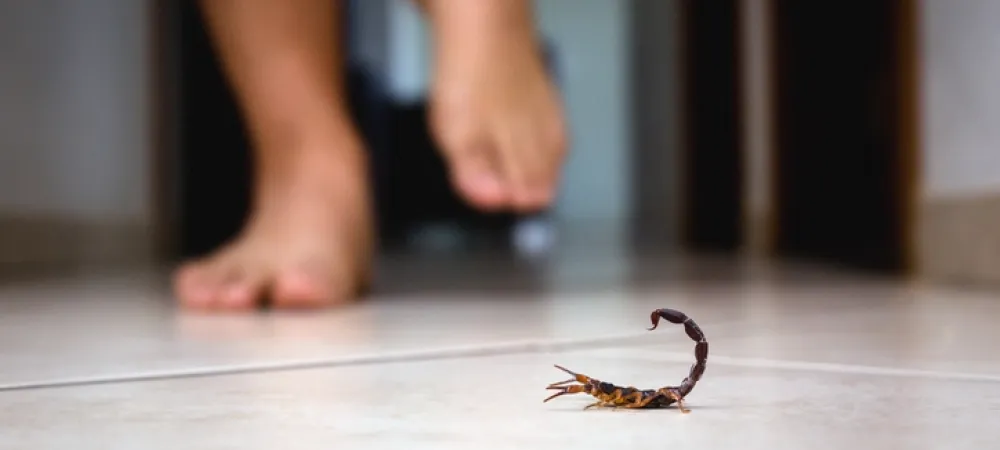
You're walking through your Phoenix home on a warm evening when your toddler points excitedly at something on the wall. Your heart drops as you spot the telltale curved tail of an Arizona bark scorpion just feet from your child.
Key Takeaways
- Bark scorpions are the most venomous in North America, with young children and pets at the highest risk for serious reactions from stings.
- Professional scorpion control prioritizes family-safe methods, including exclusion, targeted treatments, and habitat modification over harsh chemicals.
- Prevention starts with sealing entry points and eliminating hiding spots, which protect families better than DIY pesticides that may pose their own risks.
For Phoenix families, scorpions are more than just a desert nuisance. The Arizona bark scorpion is the most venomous scorpion in North America, and its venom poses particular danger to small children and pets with lower body mass. Phoenix reports up to 677 scorpion stings per 100,000 people annually — one of the highest rates in the country. Many parents share a common fear: using traditional pest control chemicals around crawling toddlers or curious dogs. The good news? Professional scorpion control has evolved to prioritize both effectiveness and family safety.
Why Phoenix Homes Are Prone to Scorpions
The Sonoran Desert provides ideal conditions for scorpions, and Phoenix's urban development has only created more opportunities for these pests to thrive near homes.
Desert Environment Meets Suburban Living
Arizona bark scorpions prefer riparian areas with mesquite, cottonwood, and sycamore groves, but they've adapted remarkably well to residential neighborhoods. Irrigation systems, swimming pools, and lush desert landscaping create moisture-rich environments that attract both scorpions and their prey.
These arachnids require very little water to survive, but they're drawn to cooler, damp areas during Phoenix's brutal summer heat. Scorpions typically see an uptick in activity during July and August, especially after monsoon rains. Your home's shaded walls, garages, and cluttered storage areas become prime real estate for scorpions seeking refuge from 115-degree days.
Common Hiding Spots Around Your Property
Bark scorpions are uniquely dangerous because they can squeeze through gaps as small as 1/16 of an inch. Around your property, they commonly hide in:
- Block walls and stacked rock borders: Hollow cinder blocks provide perfect daytime shelters
- Firewood piles and lumber stacks: Wood offers darkness, moisture, and easy prey access
- Desert landscaping materials: River rock, decorative boulders, and palm tree bark create countless hiding spots
- Garage clutter and storage boxes: Undisturbed areas near moisture sources
- Pool equipment and outdoor furniture: Damp towels and cushions attract scorpions seeking moisture
Bark scorpions are the only scorpion genus in the Southwest that can climb walls, trees, and other objects with rough surfaces. This climbing ability is what makes them particularly problematic for homes — they scale exterior walls, enter through second-story windows, and even traverse across ceilings indoors.
The Risks of DIY Scorpion Control
When you spot a scorpion near your child's play area, the instinct to grab the strongest pest spray is understandable. But DIY scorpion control often creates more problems than it solves, especially for families with young children and pets.
Chemical Hazards for Small Children
Traditional over-the-counter insecticides contain pyrethroids and other chemicals that, while EPA-approved, still pose risks to developing nervous systems. Toddlers who crawl on treated floors and regularly put their hands in their mouths face higher exposure than adults. Children under 10 — especially infants and toddlers — are at much higher risk of complications from toxin exposure due to their smaller body mass and developing nervous systems.
The same principle that makes bark scorpion venom more dangerous to children applies to chemical treatments. Lower body weight means faster absorption and potentially more severe reactions to pesticide residues on floors, baseboards, and furniture surfaces where kids play.
Pet Safety Concerns
Dogs explore the world with their noses and mouths, making them particularly vulnerable to pesticide exposure. Small dogs tolerate scorpion stings worse than large dogs, with 39% of small dogs experiencing serious side effects compared to only 13% of large dogs. Adding chemical treatments to the mix compounds the risk.
Cats are even more sensitive to certain pesticides commonly used against scorpions. They groom constantly, ingesting any residue on their fur from treated surfaces. What seems like a protective measure can create a new hazard for the family members you're trying to protect.
When DIY Methods Fall Short
Store-bought scorpion sprays face another fundamental problem: scorpions have armor that resists most insecticides, and bark scorpions were found relatively unaffected at ground zero after atomic tests. Surface sprays rarely reach scorpions hiding deep in block wall cavities, under siding, or within roof structures.
We've seen homeowners apply heavy pesticide treatments around their homes, only to find scorpions still appearing indoors weeks later. The chemicals may kill surface insects that scorpions eat, but they don't address the real problem: entry points and harborage areas. Meanwhile, your family continues breathing residual chemicals that aren't effectively controlling the scorpion population.
Signs You Have a Scorpion Problem
Early detection gives you the best chance to protect your family before a dangerous encounter occurs.
Visual Indicators
- Nighttime sightings: Scorpions are nocturnal hunters; seeing one during evening hours often means more are nearby
- Scorpions in sinks or bathtubs: They fall in while hunting at night and can't climb out of smooth surfaces
- Exoskeletons or "shells": Scorpions molt as they grow; finding shed exoskeletons indicates active populations
- UV flashlight reveals: Bark scorpions glow bright neon blue under blacklight UV exposure, making them visible from several yards away
- Increased insect activity: Crickets and cockroaches are scorpion prey; large insect populations attract scorpions
Where to Check in Phoenix Homes
98% of scorpion exposures reported to poison control occur in or around homes. Focus your inspections on these common areas:
- Behind and under refrigerators, water heaters, and washing machines
- Inside closets and storage areas with boxes on the floor
- Around door frames and window sills with gaps or deteriorating weather stripping
- Near plumbing fixtures where moisture accumulates
- In attic spaces and wall voids accessible through electrical outlets
If you see one scorpion, there are likely more nearby. Arizona bark scorpions are not territorial and usually found living in groups. A single sighting warrants a thorough inspection and professional assessment.
Safe Scorpion Removal Methods for Homes with Kids and Pets
Effective scorpion control doesn't require filling your home with harsh chemicals. Modern approaches prioritize exclusion and habitat modification over pesticide saturation.
Physical Exclusion Strategies
The most family-safe approach is keeping scorpions outside where they belong. Pest-proofing your home is by far the most effective way to reduce scorpion contact because it addresses the root cause without chemical exposure.
Here's how you can seal every entry point:
- Install or replace door sweeps on all exterior doors — most scorpions gain access through gaps under exterior doors
- Apply weatherstripping around windows and door frames
- Caulk around pipe penetrations, electrical conduits, and cable entry points
- Screen all vents with 1/8-inch or smaller mesh
- Seal cracks in stucco and foundation with silicone caulk
Habitat Modification Around Your Property
Making your yard less attractive to scorpions creates a protective buffer zone:
- Remove harborage sites: Clear wood piles, rocks, and debris from the foundation perimeter
- Trim vegetation: Keep plants 2-3 feet from exterior walls to eliminate climbing pathways
- Fix irrigation leaks: Eliminate moisture sources that attract both scorpions and their prey
- Store items off the ground: Keep pool toys, pet items, and storage containers elevated
- Cap block walls: Stucco over hollow block walls to eliminate prime harborage areas
Targeted, Low-Toxicity Treatments
When chemical control is necessary, professional-grade products can be applied strategically in exterior areas away from where children and pets spend time. Modern pyrethroid formulations applied to foundation perimeters and entry points use far lower concentrations than DIY sprays while providing longer-lasting protection.
These treatments should be exterior-only, focused on scorpion travel routes rather than broadcast spraying. The goal isn't to poison every scorpion in the desert, but to create barriers that deter entry into your home's living spaces.
Safe Monitoring Techniques
Ultraviolet light can be used to help find scorpions in the environment, as it causes them to fluoresce. Regular UV inspections allow you to track scorpion activity without chemicals. Check your yard weekly after dark, focusing on walls, block fencing, and areas near your home's foundation.
For families with toddlers, consider placing glue traps in garages and storage areas (out of reach of children and pets) to monitor scorpion activity. This helps identify problem areas without widespread pesticide use.
Why Professional Scorpion Control Is the Best Choice
Professional pest control companies offer expertise that goes beyond store-bought sprays. Every Phoenix home has unique vulnerabilities, and a customized approach ensures the safest results for families and pets.
Technicians begin with a comprehensive inspection to identify scorpion hiding spots, structural gaps, moisture sources, and other conditions that attract scorpions. They then create family-safe treatment plans that focus on exclusion and habitat modification. When pesticides are needed, licensed technicians:
- Apply products only to exterior perimeters and entry points using formulations effective at low concentrations.
- Time treatments for when scorpions are most active.
- Follow strict safety protocols to protect children and pets, applying products in areas where they do not play.
Long-term prevention includes regular inspections, monitoring, seasonal treatments, and guidance on maintaining scorpion-resistant conditions. One treatment alone will not permanently solve a scorpion problem in Phoenix, so ongoing professional care is essential.
How Greenleaf Pest Control Protects Families and Pets
Greenleaf Pest Control has helped Phoenix families for 23 years with scorpion control programs designed specifically for homes with children and pets. Our approach prioritizes safety without sacrificing effectiveness.
Our family-first protocol includes:
- A thorough inspection to identify scorpion activity and assess the insects they feed on.
- Targeted treatments that reduce the populations of scorpion prey while using reduced-risk products.
- Exterior-focused applications in areas where children and pets do not play.
- Ongoing monitoring with quarterly visits to maintain protection.
- 24/7 emergency response if scorpions appear despite preventive measures.
Technicians receive specialized training in scorpion biology, behavior, and IPM strategies. We never use interior broadcast sprays, and we review every treatment with homeowners to address safety concerns. Unlike DIY sprays that only kill visible scorpions, our program eliminates the food sources that sustain them, reducing your family’s risk of encounters over the long term.
Sources
- University of Arizona Cooperative Extension: Scorpions of the Desert Southwest United States
- University of Arizona College of Agriculture and Life Sciences: Scorpion Stings and Safety
- University of Arizona Health Sciences: What You Need to Know About Scorpion Stings