
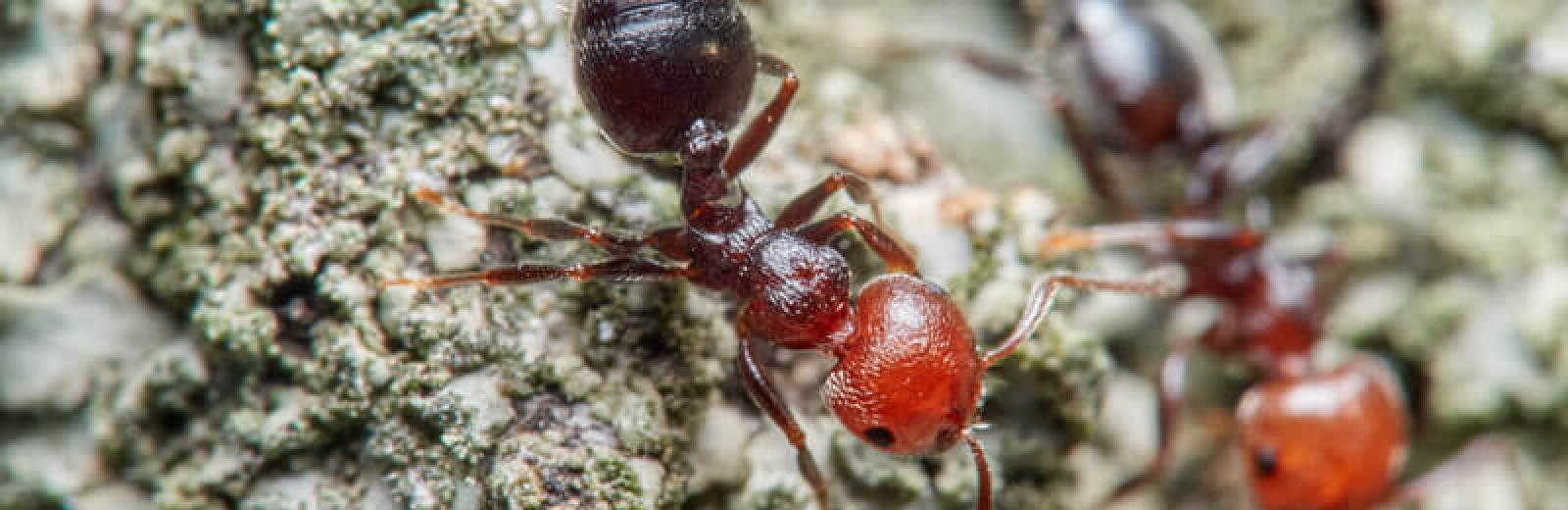
Quick Identification
Small ants, about 1/8" long, light brown to black, with a heart-shaped abdomen that they raise up and forward over the body when threatened. That posture is the single clearest way to identify this species.
What Do Acrobat Ants Look Like?
Acrobat ants are small, ranging from light brown to black, at roughly 1/8 inch long. Their most identifiable feature is the shape of the abdomen, which is flattened and heart-shaped when viewed from above. That shape becomes especially obvious when the ant is disturbed: acrobat ants raise their abdomen up and forward over the rest of the body in a distinctive defensive posture, which is where the "acrobat" name comes from.
These ants commonly nest in moisture-damaged or decaying wood, and are frequently found in the same areas as, or shortly after, termite damage or water intrusion. That pattern makes them something of an indicator species for underlying moisture problems in a structure.
| Size | Approx. 1/8" |
| Color | Light brown to black |
| Identifying trait | Heart-shaped abdomen, raised when threatened |
| Sting | No, can bite when handled |
| Typical location | Moisture-damaged wood, areas near past termite damage |
Myth: Acrobat Ants Mean an Active Termite Problem
Acrobat ants do not mean a home has an active termite infestation. They frequently move into wood that termites already damaged, sometimes years earlier, or into any wood that's softened by ongoing moisture. Their presence is a signal worth investigating, but it points to a moisture or past-damage issue rather than confirming termites are currently active.
Acrobat Ant Behavior & Habits
Acrobat ants typically nest in wood that's already soft or decaying from moisture exposure, and colonies will readily move into abandoned termite galleries or areas with existing water damage rather than excavating entirely new tunnels the way carpenter ants do. This habit makes them a useful, if unwelcome, signal. Spotting acrobat ants in a wall void or attic space is often a sign that a moisture issue exists nearby, even if it isn't otherwise visible yet.
In Phoenix-area homes, this usually means areas near roof leaks, AC condensation lines, or old termite damage that was treated but never fully repaired. Colonies are not typically large compared to species like Argentine ants, but they can be persistent once established in a chronically damp area.
DIY Approaches and Their Limits
- Treating visible ants without addressing the underlying wood moisture just gives a new colony a reason to move back in.
- Store-bought sprays reach surface activity but not colonies established deep inside wall voids or roof framing.
- Removing decayed wood without professional pest inspection can miss connected colony activity nearby.
Prevention Around Phoenix-Area Homes
- Repair roof leaks, AC condensation drainage, and irrigation-related moisture near the structure promptly.
- Follow up on any past termite treatment with a full repair of damaged wood, since abandoned galleries are a common acrobat ant nesting spot.
- Inspect attic and wall areas periodically for soft, discolored, or damp-smelling wood.
- Keep gutters clear and functioning to prevent water intrusion into fascia and roofline wood.
Acrobat Ants in Phoenix, Mesa & Scottsdale Homes
Why do I have ants after treating my Phoenix home for termites?
Acrobat ants often move into wood that was previously damaged by termites, especially if the damaged wood wasn't fully repaired after treatment. Their presence can indicate leftover moisture or structural wood issues worth a follow-up inspection.
What does it mean if the ants in my Mesa attic raise their tail when I get close?
That defensive posture, raising a heart-shaped abdomen up over the body, is specific to acrobat ants and is a reliable way to identify them without a magnifying glass.
Are acrobat ants a sign of a bigger problem in my Scottsdale home?
Often, yes, not because the ants themselves are destructive, but because they tend to nest in wood that's already compromised by moisture or old termite damage. Finding them is a good reason to check for an underlying leak or unresolved structural issue.
Found Ants Near Old Water or Termite Damage?
Dealing with acrobat ants at your place, or just not sure what you're looking at? Call Greenleaf Pest Control at 623-399-9970 and we'll help you figure out the right next step.
Get a Free QuoteAcrobat ants often overlap with structural concerns covered by our termite control service and our broader pest control service, available across Phoenix and North Phoenix.