
Quick Identification
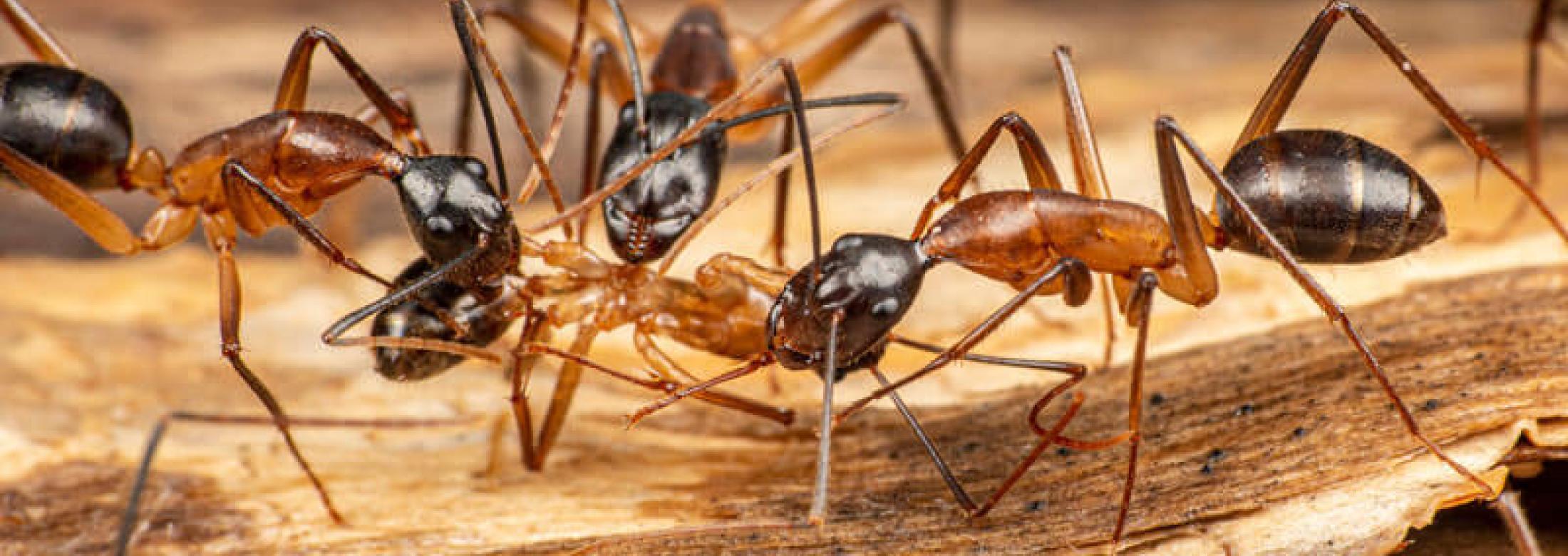
Large black or dark brown ants, 1/4" to 1/2" long, with a single evenly rounded hump on the back and smooth (not jagged) tunnels carved through wood, often near a moisture source.
What Do Carpenter Ants Look Like?
Carpenter ants are among the largest ants found around Phoenix-area homes, with workers ranging from about 1/4 inch to as much as 1/2 inch long. They're typically solid black, though some regional variants show a dark reddish-brown thorax. Like all ants, they have a segmented body and bent antennae, but their size alone often sets them apart from smaller nuisance ants like odorous house ants or little black ants found in the same kitchens.
The clearest sign of a carpenter ant problem usually isn't the ants. It's the wood. Carpenter ants excavate smooth, sanded-looking tunnels through wood to build their nests, leaving small piles of fine sawdust, called frass, at tunnel entrances. Unlike termite damage, which looks ragged and mud-lined, carpenter ant galleries have a distinctly clean, almost polished interior.
| Size | 1/4" – 1/2" |
| Color | Black to dark brown |
| Nest type | Smooth tunnels in moisture-damaged or soft wood |
| Sting | No, can bite but does not sting |
| Typical location | Window frames, roof eaves, areas near plumbing or irrigation leaks |
Myth: Carpenter Ants Eat Wood Like Termites Do
Carpenter ants do not eat wood. They tunnel through it to create nesting space, and their smooth, clean galleries look nothing like the ragged, mud-lined damage termites leave behind as they consume wood for food. Both pests can seriously affect a structure over time, so if you're unsure which one you're looking at, professional identification matters before treatment.
Carpenter Ant Behavior & Habits
Carpenter ants are drawn to wood that's already softened by moisture, such as a leaking roof, a dripping AC condensation line, or wood in contact with damp soil. In the Phoenix area, irrigation systems and pool equipment areas create exactly the kind of chronic dampness carpenter ants look for, even in an otherwise arid climate. Colonies typically start in a moisture-damaged "parent" nest and expand into dry "satellite" nests nearby, including inside wall voids or attic framing. This is part of why an infestation can be more extensive than it first appears.
Unlike fire ants, carpenter ants aren't aggressive toward people and rarely bite unless directly handled. Their primary risk is to your home's structure, not your health.
DIY Approaches and Their Limits
- Removing visible frass piles addresses a symptom, not the nest, and tells you nothing about how far tunneling has spread.
- Store-bought sprays applied to visible trails rarely reach satellite nests hidden inside wall voids or roof framing.
- Fixing an obvious moisture source helps prevent new activity but won't resolve an existing colony already established in the wood.
Prevention Around Phoenix-Area Homes
- Repair leaking irrigation lines, hose bibs, and AC condensation drains promptly. Chronic moisture is the number one draw for carpenter ants in an otherwise dry climate.
- Inspect roof eaves, window frames, and areas around pool equipment for soft or discolored wood.
- Keep firewood and lumber stacked away from the home's foundation and off the ground.
- Trim tree branches that touch the roofline, since carpenter ants use them as a bridge into structures.
Carpenter Ants in Phoenix, Mesa & Scottsdale Homes
Do carpenter ants cause the same damage as termites in Arizona?
Not exactly, but the concern is still real. Carpenter ants tunnel through wood rather than eating it, so damage tends to progress more slowly than termite damage. Left unaddressed for years, though, carpenter ant tunneling can meaningfully weaken structural wood, especially in areas with a persistent moisture source.
Why do I have carpenter ants if my Phoenix home doesn't have obvious water damage?
Even small, hidden moisture sources, such as a slow AC drain line leak, a slightly misdirected sprinkler head, or condensation trapped in a wall void, can soften wood enough to attract carpenter ants long before the damage is visible from outside.
How do I know if it's carpenter ants or termites in my Scottsdale home?
Look at the tunnels if you can access them: carpenter ant galleries are smooth and clean, while termite damage looks ragged and often contains mud tubes. If you're not sure, it's worth getting a professional inspection, since the treatment approach for each is different.
Seeing Sawdust or Wood Damage?
Dealing with carpenter ants at your place, or just not sure what you're looking at? Call Greenleaf Pest Control at 623-399-9970 and we'll help you figure out the right next step.
Get a Free QuoteCarpenter ant damage can overlap with other wood-related concerns. See our termite control service or our broader pest control service, both available across Scottsdale, Phoenix, and North Phoenix.