
Quick Identification
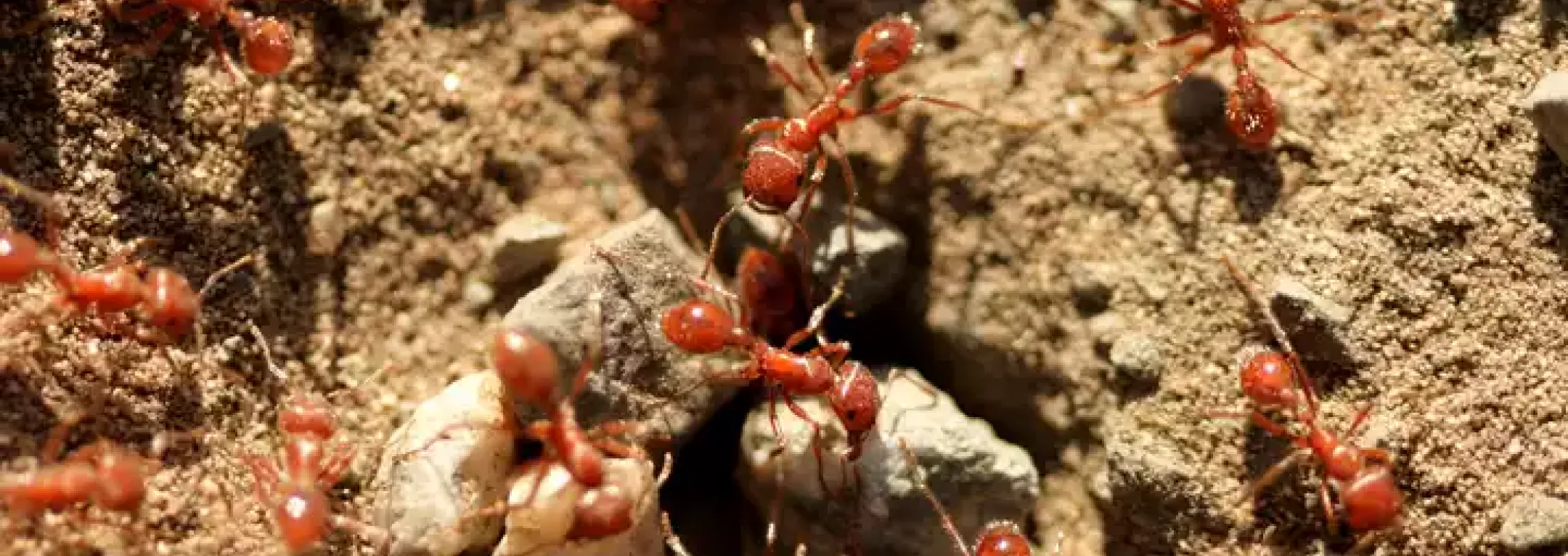
Reddish-brown body, roughly 1/8" to 1/4" long, workers of noticeably different sizes within the same colony, and a distinctive loose dirt mound nest with no visible entrance hole.
What Do Fire Ants Look Like?
Red imported fire ants (Solenopsis invicta) are reddish-brown to copper-colored ants ranging from about 1/8 inch to 1/4 inch long. Size variation is the easiest way to tell them apart from other Phoenix-area ants: a single fire ant colony contains workers of several different sizes, all active in the same nest at once. Like other ants, they have a distinct three-part body, bent antennae, and six legs, but fire ants also carry a stinger at the tip of the abdomen, which most nuisance ants in the region lack entirely.
Fire ant mounds are usually the fastest way to spot an infestation before you spot the ants themselves. Mounds are loose, dome-shaped piles of dirt with no obvious central entrance. Workers tunnel out from underneath rather than through a visible hole on top. Mounds tend to appear in open, sunny areas of the lawn and can grow to 18 inches across in established colonies.
| Size | 1/8" – 1/4", multiple sizes per colony |
| Color | Reddish-brown to copper |
| Nest type | Dirt mound, no visible entrance hole |
| Sting | Yes, painful burning sensation |
| Typical location | Open lawn areas, along irrigation lines, garden beds |
Fire Ant Behavior & Habits
Fire ants are highly aggressive when their mound is disturbed. Unlike ants that scatter when threatened, fire ants swarm the source of disturbance in large numbers within seconds, which is why lawn mowing, gardening, or kids playing barefoot near a mound are the most common ways people get stung. A single colony can house 100,000 to 500,000 workers along with multiple queens in larger "polygyne" colonies, which makes fire ant infestations spread faster than single-queen ant species.
Colonies relocate quickly after heavy rain. This pattern is especially relevant during Phoenix-area monsoon season, when flooded mounds prompt colonies to rebuild nearby, sometimes closer to structures than the original nest.
Health Risk: Fire ant stings cause an immediate burning sensation followed by a raised, itchy welt that often develops into a white pustule within a day. Most reactions resolve on their own, but multiple stings or a known allergy can trigger a more serious reaction, including difficulty breathing or swelling beyond the sting site. Seek medical attention immediately if these symptoms occur.
Myth: Pouring Boiling Water on a Mound Kills the Colony
Boiling water rarely eliminates a fire ant colony, even though it's a widely repeated DIY fix for this species. Arizona's compacted desert soil limits how deep the water actually penetrates, and established colonies build chambers well below that depth, including satellite nests connected to the main mound. The queens usually survive, and the colony rebuilds within days.
DIY Fire Ant Control and Its Limits
- Pouring boiling water directly on a mound can kill some surface workers but rarely reaches queens nested deep underground, especially in Arizona's compacted desert soil.
- Over-the-counter granular baits can reduce surface activity but often under-treat multi-queen colonies, which simply rebuild.
- Disturbing a mound to treat it without proper protective equipment significantly increases the chance of getting stung multiple times at once.
Preventing Fire Ants Around Your Home
- Inspect open lawn areas and garden beds regularly for new mounds, especially after rain.
- Keep children and pets away from unfamiliar mounds until they've been identified and treated.
- Avoid mowing directly over an active mound, which agitates the colony and increases sting risk.
- Address moisture sources like leaking irrigation lines, since fire ants are drawn to consistently damp soil.
Fire Ants in Phoenix, Mesa & Scottsdale Yards
Are fire ants common in the Phoenix area?
Yes. Red imported fire ants are established throughout central and southern Arizona, and mound activity typically increases after monsoon storms flood existing nests. Homes with irrigated lawns in the Chandler, Gilbert, and Mesa areas tend to see more consistent mound activity than drier, rock-landscaped yards.
Why do fire ant mounds keep appearing in the same part of my Scottsdale yard?
Fire ants favor open, sun-exposed soil near a consistent water source, so a spot near a sprinkler head, drainage area, or garden bed edge is likely to attract new mounds even after an old one is removed unless the colony itself is treated.
Is it safe to treat a fire ant mound myself?
It carries real risk. Disturbing a mound without the right equipment tends to trigger a mass defensive swarm, and store-bought treatments often fail to reach a colony's full network of underground chambers and multiple queens. A professional treatment plan targets the whole colony structure, not just the visible mound.
Found a Fire Ant Mound?
Dealing with fire ants at your place, or just not sure what you're looking at? Call Greenleaf Pest Control at 623-399-9970 and we'll help you figure out the right next step.
Get a Free QuoteSee related species or explore full coverage: our pest control service includes fire ant treatment across Chandler, Gilbert, and the greater Mesa area.